
Choosing the right siding for Minnesota's changing seasons.
There is something remarkable about the way a house stands through a Minnesota winter. While we stay inside, sheltered from the cold, the exterior faces months of freezing temperatures, snow, and ice. By January, temperatures can fall well below zero, and the walls of a home must withstand conditions most of us would rather experience from the comfort of a warm living room. Then summer arrives, and everything changes. Those same walls that endured the bitter cold are suddenly exposed to long, humid afternoons, intense sunlight, and temperatures approaching 100°F. Across the seasons, a Minnesota home can experience temperature differences exceeding 100 degrees.
When people think about new siding, appearance is often the first consideration. They imagine the color, texture, and how the finished exterior will complement the rest of their home. It's an understandable priority. After all, siding makes up much of what we see when we look at a house. But choosing siding involves more than finding something that looks beautiful. The material must also withstand years of changing weather, and in Minnesota, that deserves careful consideration.
01 / A Climate That Asks a Lot
Minnesota's seasons are part of what makes living here special, but they are not particularly forgiving to building materials. A bright spring afternoon can be followed by a freezing night. Summer storms bring heavy rain, humidity, and strong winds, while autumn introduces cooler temperatures and the first signs of winter. Over time, these changes affect the materials surrounding our homes. Heat causes many materials to expand, while cold causes them to contract. Water can enter vulnerable joints and openings, and repeated freezing and thawing can place additional stress on exterior assemblies.
These processes don't necessarily cause immediate or visible damage. Problems often develop gradually, particularly when moisture accumulates where it shouldn't. That's why the choice of siding material matters, but it isn't the only decision that determines how well an exterior will perform. The design of the wall, the installation methods, and the way water is managed behind the siding can be just as important. A properly built exterior should look good when the last piece of trim is installed, but its real value becomes apparent over the years that follow.
02 / The Familiar Character of Wood
LP SmartSide and Engineered Wood
Wood has long been a natural choice for residential architecture. Its texture and familiar appearance can make a house feel welcoming, whether it's a traditional Minneapolis home or a contemporary residence overlooking Lake Minnetonka. Engineered wood siding, such as LP SmartSide, builds on that tradition with modern manufacturing methods. Rather than being made from a single piece of lumber, LP SmartSide products use engineered wood strands combined with resins and protective treatments intended to improve resistance to fungal decay and termites.
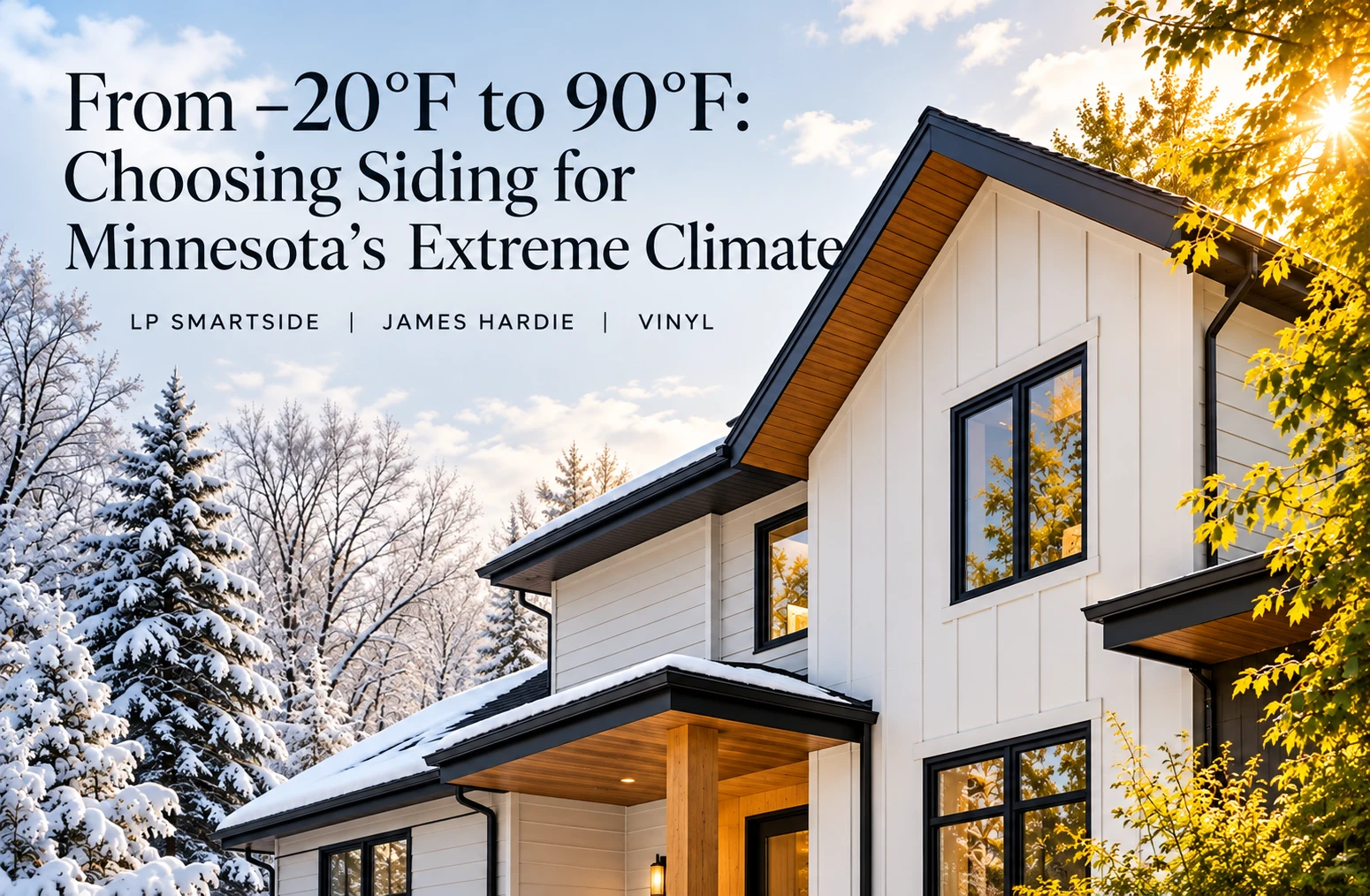
One reason engineered wood has become popular in residential construction is its versatility. Horizontal lap siding works well on traditional homes, while vertical siding and board-and-batten designs can emphasize height and create the clean lines often seen in contemporary architecture. Consider a modern home with white board-and-batten siding, dark window frames, and a contrasting wood-toned facade. Much of its character comes from the relationship between those materials. The siding isn't simply covering the walls; it's an important part of the architectural design.
Of course, engineered wood remains a wood-based product, which means moisture protection requires careful attention. Cut edges must be finished according to the manufacturer's instructions, appropriate clearances must be maintained, and flashing must direct water away from vulnerable areas. These details are easy to overlook once the project is complete. Homeowners usually notice the finished siding, not the preparation behind it. Yet proper installation is essential to getting the performance the material was designed to provide.
03 / A Different Kind of Strength
James Hardie and Fiber Cement
Fiber cement provides another option for Minnesota homeowners, with material characteristics that differ considerably from engineered wood. James Hardie is one of the best-known manufacturers in this category. Its siding products are made primarily from cementitious materials and reinforcing fibers, creating a durable exterior cladding that is noncombustible and available in a variety of finishes and profiles. From a design perspective, fiber cement is more versatile than some homeowners might expect. Traditional lap siding can give an older home a familiar appearance, while smooth panels and carefully selected trim can complement contemporary architecture.
There are practical differences to consider, however. Fiber cement is heavier than many alternatives and requires appropriate handling, cutting, fastening, and installation techniques. Product selection should also account for the manufacturer's requirements and the climate where the siding will be installed. Although fiber cement does not behave like wood, moisture management remains important. Water can still enter an improperly detailed wall assembly, regardless of what material covers the exterior. Flashing, clearances, drainage, and the underlying water-resistive barrier all need to work together. A durable material can provide significant advantages, but it cannot compensate for every mistake made during installation.
04 / The Practical Appeal of Vinyl
Vinyl siding has been a common feature of American homes for decades, largely because it offers a relatively affordable way to update an exterior without the routine repainting associated with some other materials. It is available in numerous colors and profiles, making it suitable for a wide range of residential styles. For homeowners working within a limited renovation budget, those practical benefits can make vinyl an appealing choice.
The main consideration in Minnesota is how the material responds to temperature changes. Vinyl expands as it warms and contracts as it cools. This movement is normal, and properly installed vinyl siding is designed to accommodate it. Problems can arise when panels are fastened too tightly or installed without the clearances specified by the manufacturer. As temperatures change, restricted movement can cause panels to buckle or distort. Some vinyl products may also become more vulnerable to impact damage in very cold conditions, particularly as they age.
These considerations don't make vinyl an unsuitable material for Minnesota. They simply illustrate why understanding the product and following its installation requirements matters. For some homes, vinyl offers an appropriate balance of cost, appearance, and maintenance. For others, engineered wood or fiber cement may be a better match for the architecture, budget, and long-term expectations.
05 / The Work You Don't See
Why Installation Matters
When a siding project is finished, homeowners naturally pay attention to the visible results. They notice whether the corners are straight, the trim is neatly fitted, and the siding lines up cleanly around windows and doors. Much of the work that determines how long the exterior will last, however, is hidden beneath the finished surface. Before siding is installed, the wall needs an appropriate water-resistive barrier and correctly detailed flashing around openings and transitions. These components help manage water that gets past the outer cladding and direct it away from areas where it could cause damage.
Windows provide a good example. From the outside, a window may appear to be a simple rectangular opening surrounded by siding. In reality, the connection between the window, flashing, weather barrier, and surrounding wall requires careful attention. If those elements aren't integrated properly, rainwater can find its way into the structure even when the visible siding looks perfectly installed. Similar considerations apply around doors, roof-to-wall intersections, and other exterior penetrations. These areas can be especially vulnerable because several building components meet in one place.
Minnesota's changing climate makes careful moisture management particularly important. Water that becomes trapped within a wall can create problems over time, and repeated freezing and thawing may make certain conditions worse. Good siding installation is therefore about more than attaching panels to a wall. It involves understanding how the exterior functions as a complete system, from the weather barrier beneath the siding to the smallest finishing details.
06 / Choosing What Belongs on Your Home
With several materials available, it's natural to ask which siding is best for Minnesota. Unfortunately, there isn't one answer that makes sense for every house. A homeowner renovating an older property in Minneapolis may have different priorities from someone building a new residence near Wayzata. One might be focused on affordability and maintenance, while another is looking for a particular architectural appearance or set of material characteristics.
The location and design of the house also deserve consideration. A property surrounded by mature trees may experience different sunlight and moisture conditions than a home in an open development. Complex rooflines, numerous windows, and exterior transitions can introduce additional installation requirements. Engineered wood offers considerable design flexibility and the familiar character of wood-based materials. Fiber cement provides a durable, noncombustible alternative with its own installation considerations. Vinyl remains a practical option for homeowners seeking an economical exterior with relatively simple maintenance.
None of these materials should be judged on appearance or price alone. It's worth considering product specifications, maintenance requirements, installation costs, warranty conditions, and how the chosen siding will complement the rest of the building. A knowledgeable contractor should be able to explain those differences and help homeowners understand the trade-offs without insisting that one material is always the right choice.
07 / Built for the Years Ahead
There is a satisfying moment at the end of an exterior project when the work is finished, the equipment has been cleared away, and the house can finally be seen as a whole. Sometimes the transformation is dramatic. An older home takes on an entirely new appearance, with updated materials and a fresh color scheme. Other times, the work is more understated, preserving the familiar character of a house while replacing the materials that have protected it for years.
In either case, the finished exterior becomes part of the home's everyday life. It will face winter snow, spring rain, summer heat, and autumn winds long after the installation crew has left. That is why choosing siding deserves more thought than selecting a color or comparing initial prices. The right material, combined with careful installation and appropriate maintenance, can help protect a home while preserving the appearance that made it appealing in the first place. A beautiful exterior makes a strong first impression. A well-built one should continue to serve the home for many years.
A Thoughtful Approach to Minnesota Exteriors
At Alex Exteriors, we work with homeowners and builders throughout the Twin Cities on siding installations, exterior renovations, and new construction projects. Our approach begins with understanding the home, the materials being considered, and the practical demands of Minnesota's climate. Whether you're planning a complete exterior renovation or selecting siding for a new home, we're happy to discuss the options and help you make an informed decision.
Explore Our Projects · Request an Estimate